comfort woman
victim of institutionalized sexual slavery
Usage Note
Comfort woman is a euphemism for the women forced into sexual slavery by the Imperial Japanese military during World War II. The Philippines had thousands of victims ('lolas'), and their advocacy for justice and official apology from Japan became a significant chapter in Philippine human rights history. The term is used in historical, legal, and activist discourse.
Examples
" Marami ang comfort woman noong digmaan. "
Natural Translation
There were many comfort women during the war.
Literal Translation
Many the comfort woman during war.
" Lumaban ang mga comfort woman para sa katarungan hanggang sa katapusan ng kanilang buhay. "
Natural Translation
The comfort women fought for justice until the end of their lives.
Literal Translation
Fought the (plural) comfort woman for justice until the end of-the their life.
" Hanggang ngayon, patuloy na ipinaglalaban ng mga naging comfort woman ang opisyal na paghingi ng tawad mula sa pamahalaan ng Hapon. "
Natural Translation
To this day, the former comfort women continue to fight for an official apology from the Japanese government.
Literal Translation
Until now, continuing fought-for by-the became comfort woman the official asking of forgiveness from the government of Japan.
Take Tagalog with you
The full course, a 12,500-word dictionary, and flashcards that make every word stick — free to start on iOS and Android.




Tagalog builds thousands of words from a few hundred roots.
How Tagalog words workRelated Words
- AWOL absence without leave
- Amboy short for American boy
- Ati ethnolinguistic group in Panay
- Balbalan ethnolinguistic group (Kalinga)
- Hiligaynon ethnolinguistic group/language
- Ilokana female native of the Ilocos region; Ilokana woman
- Ilokano Ethnolinguistic group in Ilocos
- Ilonggo Language/People of Western Visayas
Explore Tagalog by topic
Free guides on grammar, vocabulary, and culture to take you past single-word lookups.

Tagalog Time Expressions: Past, Present & Future Guide
Tagalog has no tenses — it uses aspect. Learn time words, days of the week, clock time, and the aspect system, with vocabulary tables and cultural notes.
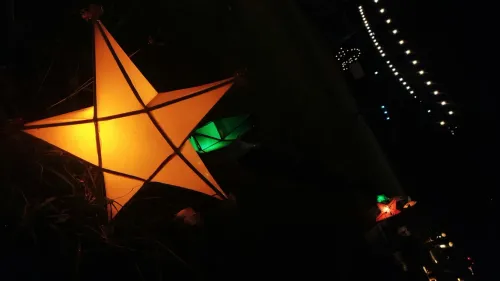
Philippine Christmas Traditions: World's Longest Holiday
Philippine Christmas traditions run four months — from Ber-month carols to Simbang Gabi dawn masses, Noche Buena feasts, and parol lanterns lighting every street.

Seasons in the Philippines: A Tagalog Guide
The Philippines has two seasons, not four. Learn tag-araw, tag-ulan, and taglamig, the generative tag- prefix, and the weather vocabulary to match.

Tagalog Word Order: Sentence Structure Made Simple
Why Tagalog puts the verb first, and how ang, ng, and sa markers work. A clear guide to VSO word order, forming questions, and negation.